


info@dawsonselectrical.co.uk
Milton Keynes: 01908 822771
Bedford: 01234 434921
Northampton: 01604 269624
Mobile: 07912 748282

EV Chargers for Homes

Making the switch to an EV charger for your home? We’re here to help with expert advice, professional installation, and complete peace of mind. We offer FREE quotes and proper advice to provide you with the ultimate sustainable solution.

Additionally, we can supply and fit most makes of EV chargers within 10 days of order (Subject to Availability).

Is It Actually Worth Installing One?

Most people already know the basics; if you drive an electric car, you need to charge it. The question most homeowners actually want answered is whether installing a dedicated home charge point is worth it, or whether just using public chargers when necessary is fine. It’s worth it and the numbers make that clear.

At Dawsons Electrical, we install EV chargers for homes across Milton Keynes, Bedford, Northampton and the surrounding areas. We’re OZEV approved and NICEIC accredited, and we’ve been doing this alongside a full range of domestic electrical work for over ten years. If you want a straight answer on what it will cost and what it involves, get a free quote here and we’ll come to you.

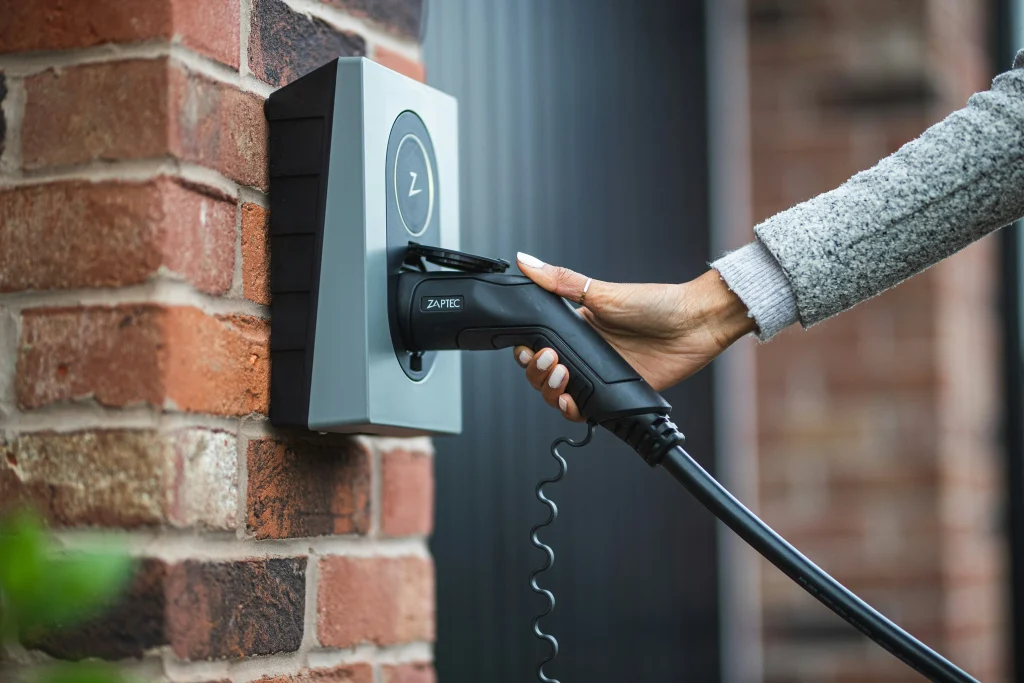
Zaptec EV charger on home wall.

The Real Cost of Not Having an EV Charger For Homes

This is the bit that tends to change people’s minds. The cost gap between home charging and public charging is bigger than most people assume.

Charging at home on a standard electricity tariff costs around 24p per kWh, which works out at roughly 7p per mile for most EVs. If you’re on a smart off-peak tariff, that drops significantly. As of April 2026, the overnight off-peak rate sits at around 7p per kWh for the whole home. At those rates, a full charge for a 60kWh battery costs somewhere between £3.50 and £4.20. That’s around 200 miles of range for less than the price of a coffee.

Compare that to rapid public charging. Public rapid and ultra-rapid chargers in the UK average around 76p per kWh. The same full charge costs closer to £45. That’s not an occasional inconvenience, that’s a meaningful difference to your monthly running costs.

Put it another way: EV owners who charge mostly at home save over £1,000 a year compared to petrol drivers. Those relying mainly on public rapid chargers narrow that gap considerably. The home charger is doing a lot of the work in that saving.

And here’s the thing most people don’t think about. A smart home charger is the thing that unlocks access to cheap overnight tariffs in the first place. Most energy suppliers offering EV-specific rates require a compatible smart charger to be installed. Without one, you’re stuck on a standard rate. So the charger doesn’t just make charging convenient, it’s also the route to the cheaper electricity.

What an EV Charger for Homes Actually Involves

A domestic EV charger is a wall-mounted unit, normally installed on the exterior of the property or in a garage, and connected to your household electricity supply. For UK homes, the standard option is a 7kW unit, which works with the single-phase supply that almost every property already has.

A 7kW charger adds around 25 to 30 miles of range per hour. Most modern EVs with 40 to 80kWh batteries charge from near empty to full overnight in six to eight hours, well within what a standard night’s sleep allows. For the vast majority of homeowners, this is more than enough.

All new home EV chargers installed in the UK must be smart chargers by law. That means they come with scheduling and monitoring capabilities built in, and they’re compatible with time-of-use tariffs that let you take advantage of cheaper overnight electricity rates. It’s not optional, but it’s also genuinely useful.

The installation itself is straightforward for most properties. We carry out a quick assessment first to check your consumer unit has capacity and establish the best route for the cable. A standard install, wall-mounted close to the consumer unit, typically takes two to four hours. More complex jobs, like running cable to a detached garage or dealing with an older board, take longer and we’ll flag that before we start.

The General Installation Process

We assess your home setup and recommend the best charging solution for your needs. We offer this service to Northampton, Bedford, Milton Keynes, and more!

We’ll guide you through choosing the right charger – whether you need a faster Level 2 unit for regular use or a standard charger for occasional top-ups. You can also decide between a tethered charger (with a built-in cable) or untethered (use your own cable).

We inspect your fuse board and make sure everything meets current UK electrical safety standards.

We mount the charger on your wall, connect it to your electrical system, and make sure the cables are tidy and safe.

Improve energy efficiency and comfort with our HVAC and building automation services. From air conditioning installations to smart building controls, we’ll help you optimise your facility’s environmental performance.

We’ll show you how to use your new charger and are always available if you need further support.

Tethered or Untethered: What's the Difference and Which Should You Choose

This comes up in almost every domestic installation conversation, so it’s worth being clear.

A tethered charger has the cable permanently attached to the unit, the same way a petrol pump has a hose attached. You pull up, plug into the car, and that’s it. No cable to find, unfold or store. It’s the simpler daily experience and it’s slightly more robust because the connection point on the charger is a permanent socket rather than a plug socket exposed to the weather.

An untethered charger is a socket on the wall. You use your car’s own cable to connect. It’s a bit more flexible if you change to a different EV brand in future, since different cars use different cables. It also keeps the unit itself smaller and tidier looking on the wall.

For most people with a single EV and no plans to change manufacturer, tethered is the easier choice. If you have two EVs of different types in the household, or you just prefer the flexibility, untethered makes sense. The cost difference is modest, around £100 to £200, and neither is wrong.

Why Installation Of EV Chargers for Homes Requires Our Electricians

If you are looking for an electrical contractor in Bedford, Dawsons Electrical are here to help. We understand the intricacies of commercial electrical requirements. We ensure that when we provide our electrical solutions, your business is not interrupted.

Professionally Certified

When having your home charging unit installed, you really need to consider expertise and qualifications when choosing the business to do so. At Dawsons Electrical, our team are NICEIC approved installers, which means we are fully certified to carry out domestic electrical work to the highest industry standards. All our electricians are trained to City & Guilds qualifications, ensuring they have the practical skills and technical knowledge needed for complex installations like EV chargers.

Compliance & Safety

We are authorised to carry out and register work under Part P of the Building Regulations, giving you peace of mind that all installations are legally compliant and safe. Our work is completed in line with BS7671 wiring regulations, the national safety standard for electrical installations. In short, every charger we install is fitted with precision, care, and full regulatory compliance.

Free Quotations & Guidance

We also offer free quotations and expert advice, so you can make an informed decision with no pressure. With Dawsons Electrical, we put our customer first at every stage and put all our efforts into producing outstanding results.

A Partner for All Sectors

Our extensive experience across a range of sectors, from retail and hospitality to education and healthcare, means we understand the diverse needs of different industries. This expertise allows us to provide bespoke solutions that fit the specific requirements of your sector.

Start Charging At Home - Speak To Our Experts Now

There is no better way to get started with an electrical project than to ask the questions or queries directly to the company doing the job. We can answer any of your questions and even get you started today by offering you a free quote. Contact our friendly team at Dawsons Electrical today to talk about EV charger for homes. Call us on 01908 822771 or use our email/contact form.

Frequently Asked Questions on EV Chargers for Homes

Typical home chargers are:

  • 7 kW (single-phase) – common in homes, usually 20–30 miles of range per hour

  • 11–22 kW (three-phase) – where available, roughly 2–3x faster than 7 kW

Actual speed depends on your car’s onboard charger and your home’s supply.

Usually no, as most domestic chargers fall under permitted development. There can be exceptions in listed buildings, conservation areas, or shared car parks, so an installer or local authority might need to check.

Yes, if:

  • You have solar PV installed, and

  • Your charger or energy management system supports solar integration

Many smart chargers can prioritise solar or blend solar with grid power.

Yes. EV chargers and car charging ports are weatherproof and tested for outdoor use. Just make sure the charger is installed by a qualified professional and never use damaged cables.

The best place for your home charger is as close as possible to where you park your car, mounted on a solid wall or a suitable post. The cable should be able to reach your car easily without trailing across walkways or creating any trip hazards. During the survey, we will recommend an exact position that’s safe, compliant with UK wiring and building regulations, and suitable for outdoor use, making sure the unit is properly weather-protected.

Yes. A domestic charge point needs to be installed close enough to where you park to be practical. If you park on the street without a designated space, a home charger isn’t suitable and you’d need to rely on public charge points instead.

What an EV Charger for Homes Actually Involves